All articles
BGH 2026: split A/C on balconies and balcony repairs under §20 WEG
Two 2026 BGH rulings explain when a condo owner can install a split A/C on a balcony and how balcony repairs are decided. What §20 WEG lets you do—and what approval and costs to expect.
What the two BGH decisions say
On 17 July 2026 (case V ZR 162/25), the Federal Court of Justice (BGH) held that a condominium owner may, in principle, demand that the owners’ association permit the installation of a split air‑conditioning unit on the owner’s balcony by resolution under §20 WEG—even though split A/Cs are not among the privileged measures listed in §20(2) WEG. The court confirmed that installing a split unit with a facade penetration is a “bauliche Veränderung” (alteration of common property) requiring a resolution. Importantly, expected operating noise or heat exhaust is normally not a reason to refuse installation in advance; problems are to be managed later through usage restrictions if needed, rather than requiring removal. The decision anchors the claim in §20(3) WEG, which allows a non‑privileged alteration if no owner is disproportionately affected (or all affected owners consent). ([dnoti.de](https://www.dnoti.de/entscheidungen/details/?cHash=27c6001590b3449c4adf0edde4cd2933&tx_dnotionlineplusapi_decisionsdetails%5Bcontroller%5D=Decisions&tx_dnotionlineplusapi_decisionsdetails%5Bnodeid%5D=728fecbd-28c0-4747-b6ec-4f71b7e447f1))
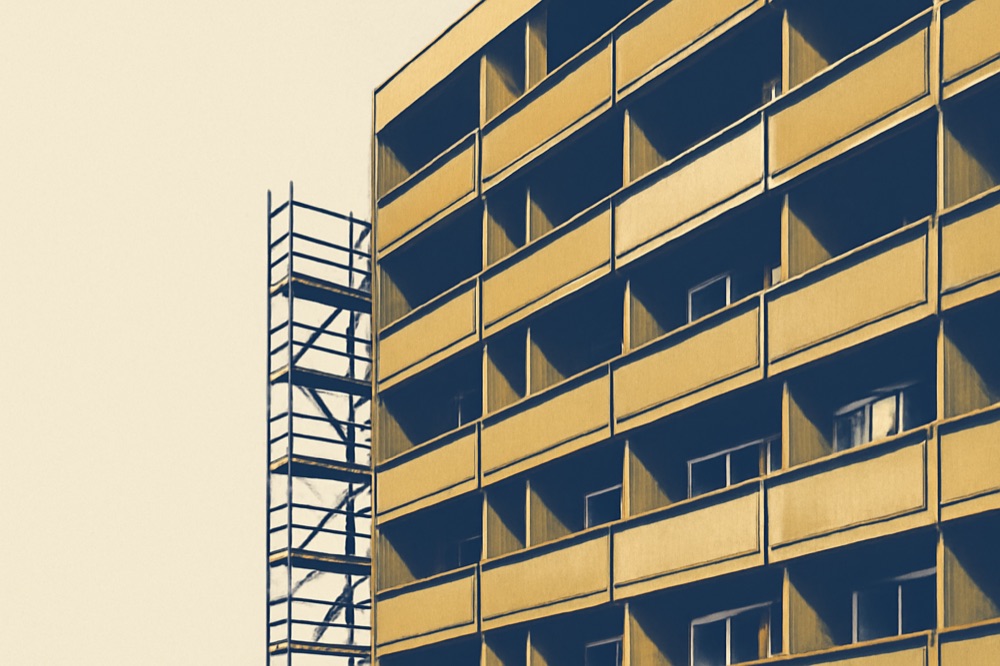
On 24 April 2026 (case V ZR 102/24), the BGH decided a dispute about balcony renovation. Even if the declaration of division (Teilungserklärung) puts the duty and cost of maintaining balcony components on each unit owner, the community (GdWE) keeps the competence to decide on preservation measures affecting those balconies. The court replaced the owners’ negative votes with a basic resolution that the balconies and balustrades must be renewed “dem Grunde nach”, leaving the choice of variant to the owners. The judgment clarifies that while the GdWE may resolve to act, the agreed cost allocation in the declaration still applies to the affected owners. Where hazards exist or coordinated work is needed (e.g., scaffolding across many balconies), the community must not remain inactive; its discretion can be reduced to zero so that some suitable renovation must be decided. ([gesetze.co](https://gesetze.co/urteile/V_ZR_102-24))
These rulings matter for foreign buyers because they set clear approval paths for two common issues: cooling retrofits and concrete balcony repairs. They also allocate who decides and who pays.
Split A/C on a balcony: how §20 WEG applies after 17 July 2026
The statute distinguishes between three routes.
- Privileged measures under §20(2) WEG can be demanded if “reasonable” (barrier‑free access, charging for electric cars, improved burglary protection, connection to a very‑high‑capacity telecoms network, and—by statutory text—plug‑in balcony solar). Split A/C units are not on this list. ([gesetze-im-internet.de](https://www.gesetze-im-internet.de/woeigg/__20.html?utm_source=openai))
- All other alterations of common property require a permissive resolution under §20(1) WEG (“Beschlusszwang”). Drilling through the facade to run A/C lines is such an alteration. ([dnoti.de](https://www.dnoti.de/entscheidungen/details/?cHash=27c6001590b3449c4adf0edde4cd2933&tx_dnotionlineplusapi_decisionsdetails%5Bcontroller%5D=Decisions&tx_dnotionlineplusapi_decisionsdetails%5Bnodeid%5D=728fecbd-28c0-4747-b6ec-4f71b7e447f1))
- A claimant can still get permission for a non‑privileged measure under §20(3) WEG if no other owner is burdened beyond what is unavoidable in orderly co‑existence—or if all affected owners consent. The BGH confirms that this pathway fits split A/Cs on balconies. Expected operating noise or condensate risks do not usually defeat the claim at the permission stage; if nuisance later arises, targeted time‑of‑use limits are typical remedies, not a total shutdown. Owners pursue this via a “Beschlussersetzungsklage” under §44 WEG if the assembly refuses. ([dnoti.de](https://www.dnoti.de/entscheidungen/details/?cHash=27c6001590b3449c4adf0edde4cd2933&tx_dnotionlineplusapi_decisionsdetails%5Bcontroller%5D=Decisions&tx_dnotionlineplusapi_decisionsdetails%5Bnodeid%5D=728fecbd-28c0-4747-b6ec-4f71b7e447f1))
Practical points for buyers and expatriate owners:
- Expect to carry the full cost of your A/C if permitted. §21(1) WEG puts the costs of a bauliche Veränderung that is allowed for a specific owner on that owner. The community may attach execution conditions (placement, screening, vibration isolation) in the resolution. ([gesetze-im-internet.de](https://www.gesetze-im-internet.de/woeigg/__21.html?utm_source=openai))
- Prepare a complete application dossier: model and dimensions of the outdoor unit, balcony location plan, facade penetration details, drainage, mounting method, and a proposal for quiet hours. While the BGH rejects blanket pre‑emptive noise objections, your plan should anticipate them.
- Do not install first. Unauthorized alterations expose you to removal or usage orders and legal costs. The BGH has repeatedly emphasized the need for a prior resolution when common property is affected. ([dnoti.de](https://www.dnoti.de/entscheidungen/details/?cHash=27c6001590b3449c4adf0edde4cd2933&tx_dnotionlineplusapi_decisionsdetails%5Bcontroller%5D=Decisions&tx_dnotionlineplusapi_decisionsdetails%5Bnodeid%5D=728fecbd-28c0-4747-b6ec-4f71b7e447f1))
Accessible practitioner summaries of V ZR 162/25 reach the same bottom line: get a resolution; if reasonably sited and specified, you can force permission; noise is a question for later regulation. ([beck-aktuell.de](https://www.beck-aktuell.de/heute-im-recht/rechtsprechung/bgh-VZR16225-weg-wohnungseigentuemergemeinschaft-einbau-klimaanlage-balkon-2026-07-17?utm_source=openai))
Balcony works after 24 April 2026: who decides and who pays
Many declarations of division shift balcony maintenance and repair costs to the unit to which the balcony belongs. Buyers often read this to mean that each owner must arrange and decide individually. V ZR 102/24 corrects that reading.
- Decision‑making competence: The GdWE retains competence to decide preservation measures on common balcony components even if the declaration assigns the maintenance duty and costs to unit owners. The community remains responsible for the building’s condition and safety. ([gesetze.co](https://gesetze.co/urteile/V_ZR_102-24))
- Court‑ordered direction: Where serious defects exist across multiple balconies, it is not orderly administration to reject all proposed variants and do nothing. A court may replace the negative votes with a basic resolution that balconies must be renewed, while leaving the selection of variant to the owners. The BGH did exactly that. ([gesetze.co](https://gesetze.co/urteile/V_ZR_102-24))
- Costs: Even if the GdWE resolves to carry out the works, the agreed cost allocation in the declaration generally still binds the owners concerned with “their” balconies. The judgment states this expressly. ([gesetze.co](https://gesetze.co/urteile/V_ZR_102-24))
- One balcony only: If only one balcony is affected, the community must step in when it would be unreasonable for the individual to organize the work alone—for example due to scaffolding and coordination burdens. ([gesetze.co](https://gesetze.co/urteile/V_ZR_102-24))
For context and public reporting, see the national broadcast summary on the day of judgment. ([tagesschau.de](https://www.tagesschau.de/wirtschaft/balkon-sanierung-bgh-urteil-100.html?utm_source=openai))
Key buyer checks:
- Read the declaration for balcony clauses that transfer maintenance and costs. This affects who pays, not who decides. - Ask the manager for any expert reports on balconies and for minutes showing failed votes. In a building with hazardous balconies, expect that a court could force a basic decision to proceed. - Budget for joint scaffolding even if your unit’s balcony is the only one failing—coordination is a community issue.
Costs and voting thresholds you should expect
- Costs for a split A/C permitted for one owner are that owner’s costs under §21(1) WEG. ([gesetze-im-internet.de](https://www.gesetze-im-internet.de/woeigg/__21.html?utm_source=openai))
- For community measures beyond individual permissions, §21 also allows cost‑sharing across all owners in specific cases (e.g., measures passed by at least two‑thirds of votes and at least half of all quotas, unless costs are disproportionate; or measures that amortise within a reasonable period). Read §21 carefully and match it to the planned decision type. ([bgbl.de](https://www.bgbl.de/xaver/bgbl/start.xav?start=%2F%2F%2A%5B%40attr_id%3D%27bgbl121s0034.pdf%27%5D&utm_source=openai))
- Privileged measures under §20(2) WEG—such as charging infrastructure or a VHCN telecom connection, and plug‑in balcony solar—are claimable if “reasonable”, but still require a resolution on execution details; costs for such owner‑driven measures follow §21(1). ([gesetze-im-internet.de](https://www.gesetze-im-internet.de/woeigg/__20.html?utm_source=openai))
If your use case is borderline or costly, consult a German WEG lawyer before committing to a purchase contract. These are community‑law questions and can be litigated under §44 WEG.
Nothing on this page is investment, tax or legal advice. Price bands are indicative asking prices and disagree between sources by design. Verify every figure with a qualified German notary, tax adviser (Steuerberater) or lawyer before committing capital.