All articles
Germany 2026 AML: property cash ban, 27 Jun GwG update, TR “Abweichung”
What changed for anti‑money‑laundering in German property deals in 2026: the cash ban, 27 June GwG amendments, the new real‑estate “Abweichungsmeldung” in the Transparency Register, and EU AMLA guidance due 10 July 2026.
Scope: what changed in 2026
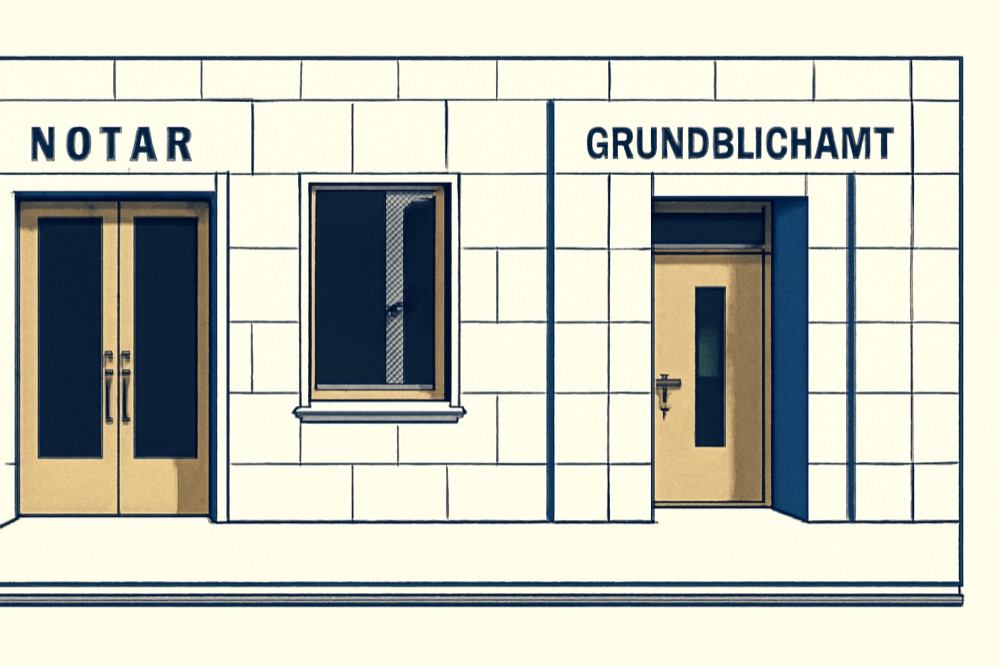
Three anti‑money‑laundering (AML) elements matter for anyone buying or financing German real estate in 2026. First, Germany’s statutory cash ban for property deals in § 16a Geldwäschegesetz (GwG) remains in force; it has applied since 1 April 2023 and is now fully reflected in reporting rules for real‑estate transactions. Second, from 1 January 2026, a new discrepancy report (“Abweichungsmeldung”) under § 23b GwG applies to the real‑estate data held in the Transparenzregister (Transparency Register). Third, on 27 June 2026, amendments to the GwG entered into force via the law on digitalising the execution of real‑estate contracts (ImmoVVDigG); among other things they improve anti‑money‑laundering data flows linked to property tax notifications. In parallel, at EU level the new Anti‑Money Laundering Regulation (EU) 2024/1624 requires the EU Anti‑Money Laundering Authority (AMLA) to issue several AML guidelines by 10 July 2026, including on internal controls, business‑wide risk assessment and ongoing monitoring.
The cash ban: how it works at signing and completion
What is prohibited. In any contract to buy or swap German real estate, the consideration may not be paid in cash, crypto‑assets, gold, platinum or gemstones. The same ban applies if you buy shares in a company that directly or indirectly holds German real estate. That rule sits in § 16a(1) GwG. If someone nevertheless hands over cash or crypto, the payer can reclaim it as unjust enrichment; the transaction will not be recognised as valid payment under the property contract.
What the notary must check. Before the notary can apply to register you as owner in the Grundbuch, you must prove that payment was made by permitted means. Bank confirmations from a credit institution on either side of the deal are expressly recognised as suitable proof, but other documentary evidence can work if they demonstrate a non‑cash transfer. The notary must test the plausibility of the payment proof and may not file the registration until that check is complete. If the notary had to submit a suspicious transaction report (STR) under § 43(1) GwG, the transaction may not be carried out before the fifth working day after the STR was sent. See § 16a(2)–(3) GwG.
Limited verification exceptions. The notary’s duty to verify documentation does not apply if the consideration does not exceed EUR 10,000, or where payment runs via the notary’s escrow account (Anderkonto). Important: these are exceptions only to the notary’s verification duty. The cash ban itself still applies to the whole consideration. See § 16a(5) GwG.
Red flags you must avoid. The real‑estate reporting ordinance (GwGMeldV‑Immobilien) lists indicators that trigger a report to the Financial Intelligence Unit (FIU). Using, or intending to use, any of the banned means of payment above EUR 10,000 is a reportable red flag. Trying to split the price or to settle part of the price outside the deed to evade the ban is risky and may block registration until the matter is cleared.
Transparency Register: real‑estate data and the new “Abweichungsmeldung”
What real‑estate data exists in the register. Since the sanctions‑enforcement reforms, the German Transparency Register holds property identifiers for entities that are registered as owners in the land register. Access to these real‑estate data is limited to authorities, courts, and certain obliged entities, including notaries; it is not public. The legal bases sit in §§ 19a and 23 GwG.
New from 1 January 2026: discrepancy reporting for real‑estate entries. § 23b GwG created a duty for specific actors to report discrepancies they find between the real‑estate details visible in the Transparency Register and the information they otherwise hold. Who must report: the authorities listed in § 23(1) sentence 1 no. 1 GwG, obliged entities under § 2(1) nos. 1–3 and 7 GwG, and notaries. Once a discrepancy notice is received, the register marks the entry as under review and, if confirmed, corrects the real‑estate mapping. The Transparency Register’s official help pages describe this duty as an “Abweichungsmeldung”.
What foreign buyers should do. If you buy through a company or trust, make sure the beneficial‑ownership data and the land‑register ownership of your entity are recorded consistently. Expect banks and notaries to cross‑check the register and to file an Abweichungsmeldung if what they see does not match their KYC files or the deed. Mismatches can slow your closing.
27 June 2026: GwG changes linked to digital real‑estate execution
On 27 June 2026, Article 14 of the ImmoVVDigG amended the GwG. One change relevant for property deals is a new data‑access rule allowing the FIU, under defined suspicion thresholds, to obtain datasets received by state tax authorities via the electronic real‑estate transfer tax notification system (GrEStG §§ 18 and 22a). The aim is to match tax‑relevant contract data with AML intelligence when there are indications of money‑laundering risk. The same law adjusted several Transparency Register sections that reference real‑estate data; consolidated versions of §§ 19a, 22 and 23 show the state of the law as of late June 2026.
For buyers and lenders, the message is practical: disclosures you make for real‑estate transfer tax can now feed, where legal conditions are met, into AML analysis. Expect greater consistency checks between the notarised deed, the tax filing, bank KYC and the Transparency Register. Inaccurate or incomplete disclosures increase the chance of questions from banks, notaries or authorities.
EU layer: AMLA guidance due by 10 July 2026
Regulation (EU) 2024/1624 sets specific deadlines for AMLA. By 10 July 2026, AMLA must issue guidelines on the scope of obliged entities’ internal policies, procedures and controls (Article 9(4)), on minimum content for business‑wide risk assessments (Article 10(4)), and on ongoing monitoring of business relationships and transactions (Article 26(5)). AMLA ran consultations in spring–summer 2026 on these texts. For non‑financial obliged entities in real estate (notaries, certain intermediaries), these EU guidelines will frame supervisory expectations on staffing of compliance functions, documentation standards and monitoring routines.
If you operate through a special‑purpose vehicle or a cross‑border structure, plan for documentation that demonstrates proportionality: risk assessments calibrated to your asset, tenant and geographic profile; clear allocation of AML roles; and monitoring that ties to rent flows and capital movements. Your German counterparties (banks, notaries) will expect this alignment once the EU instruments apply.
Checklist: preparing a clean, financeable deal
- Move all consideration through traceable payment accounts. Do not use cash, crypto, bullion or gemstones for any part of the price. - Ask the notary early what proof of payment they will accept. Obtain bank confirmations aligned with the deed’s payment clauses. - Ensure your entity’s Transparency Register data (beneficial owners and any property entries) are accurate and consistent with the land register and with your bank’s KYC files. Expect an “Abweichungsmeldung” if not. - Coordinate with your bank’s compliance team well before signing; non‑resident buyers often face extended KYC and source‑of‑funds checks. - If an STR is filed, build in timing slack: the deal cannot move forward until five working days after the report was sent by the notary. - For complex structures and funds, have an AML policy pack ready that matches AMLA’s July 2026 guideline topics: internal controls, business‑wide risk assessment, and ongoing monitoring.
This article is a general guide. For case‑specific questions, ask a German notary for § 16a GwG procedure, German AML counsel for GwG/Transparenzregister duties, and your bank for payment documentation requirements.
Nothing on this page is investment, tax or legal advice. Price bands are indicative asking prices and disagree between sources by design. Verify every figure with a qualified German notary, tax adviser (Steuerberater) or lawyer before committing capital.