All articles
KfW 266 “Commercial to Residential” grant: up to €30,000 per unit from 1 July 2026
Germany’s KfW 266 grant pays 30% of eligible conversion costs up to €30,000 per new residential unit from 1 July 2026. It uses de‑minimis aid and plugs into BEG processes.
What KfW 266 is and what changed on 1 July 2026
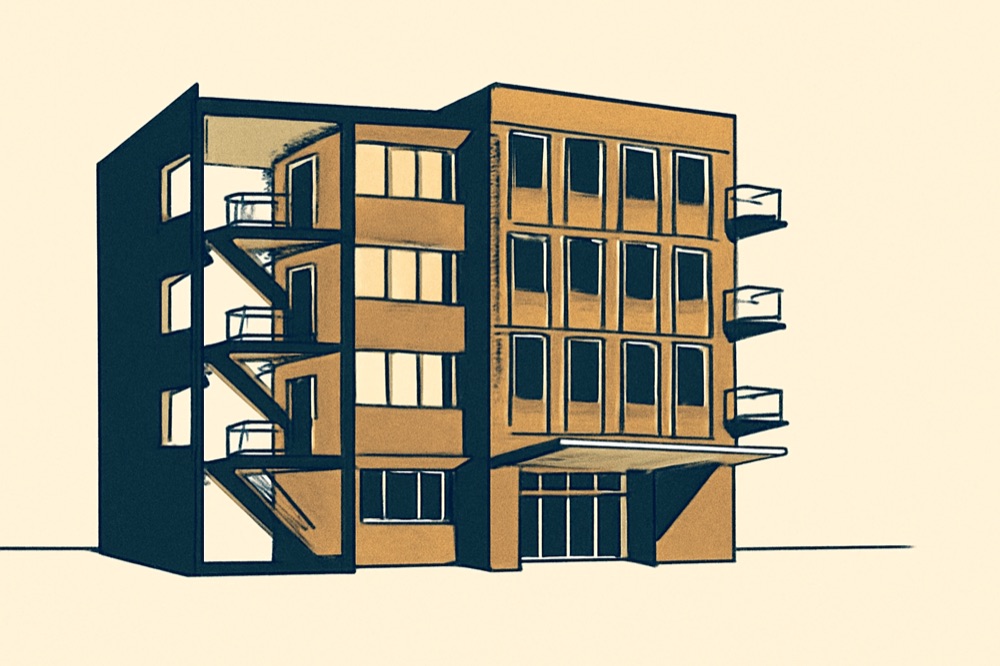
KfW 266 is a federal investment grant for converting heated non‑residential buildings or parts of buildings into residential units in Germany. It launched on 1 July 2026. The grant covers 30% of eligible conversion costs up to €100,000 per new unit, i.e. up to €30,000 per unit, with a project cap of €300,000 if multiple units are created and no de‑minimis aid has been received in the last three years. You do not repay the grant. ([kfw.de](https://www.kfw.de/About-KfW/Newsroom/Latest-News/Pressemitteilungen-Details_899456.html?utm_source=openai))
The programme is administered by KfW under product number 266 (“Gewerbe zu Wohnen – Investitionszuschuss”). Full conditions are on the KfW product page and in the product information sheet (Merkblatt). ([kfw.de](https://www.kfw.de/inlandsfoerderung/Unternehmen/Wohnwirtschaft/F%C3%B6rderprodukte/Gewerbe-zu-Wohnen-%28266%29/))
Who qualifies: applicants, buildings and minimum standards
Applicants. The programme is open to private individuals (including self‑users), freelancers, companies (including municipal companies), homeowners’ associations (WEG), partnerships (e.g., GbR), private‑law legal entities (including housing co‑ops), corporations under public law and municipalities. Excluded are the Federal Government, the Länder and their majority‑owned entities (unless performing municipal tasks), political parties, insolvency cases, and sectors excluded under Article 1(1) of the EU de‑minimis regulation. ([kfw.de](https://www.kfw.de/inlandsfoerderung/Unternehmen/Wohnwirtschaft/F%C3%B6rderprodukte/Gewerbe-zu-Wohnen-%28266%29/))
Properties. Only projects in Germany are eligible. The original building application or notice for the building must be at least five years old at the time of application. After completion, at least one new residential unit must exist and all funded units must be used for residential purposes for at least 10 years. A “residential unit” means self‑contained rooms for permanent living with a lockable entrance plus kitchen/kitchenette and bathroom/WC (different rules apply to care/elderly homes). ([kfw.de](https://www.kfw.de/PDF/Download-Center/F%C3%B6rderprogramme-%28Inlandsf%C3%B6rderung%29/PDF-Dokumente/6000005303_M_266.pdf))
Energy performance. After conversion and renovation, the funded units must reach at least Efficiency House 85 – Renewable Energy class (EH 85 EE). Monuments and other particularly valuable existing fabric may meet EH Denkmal EE instead. Exemptions from the EE class apply if, at application date, the building already has a 65%‑renewable heat source or heat network connection, or a new heating system was commissioned within the previous five years. ([kfw.de](https://www.kfw.de/PDF/Download-Center/F%C3%B6rderprogramme-%28Inlandsf%C3%B6rderung%29/PDF-Dokumente/6000005303_M_266.pdf))
How much you get and the de‑minimis cap
Grant size. KfW pays 30% of eligible conversion costs up to €100,000 per new unit, hence up to €30,000 per unit, capped at €300,000 per project if multiple units are created. ([kfw.de](https://www.kfw.de/inlandsfoerderung/Unternehmen/Wohnwirtschaft/F%C3%B6rderprodukte/Gewerbe-zu-Wohnen-%28266%29/))
De‑minimis aid. The grant is state aid under the EU’s de‑minimis rules. All economically active applicants (including landlords) must submit a de‑minimis declaration with the application; the only exception is individuals applying exclusively for self‑use of a single unit. De‑minimis aid across the “single undertaking” cannot exceed €300,000 over any three‑year period. Since 1 January 2026, each de‑minimis grant is recorded in the European Commission’s central register within 20 days of award. Plan group structures and other aid accordingly to avoid breaching the cap. ([kfw.de](https://www.kfw.de/PDF/Download-Center/F%C3%B6rderprogramme-%28Inlandsf%C3%B6rderung%29/PDF-Dokumente/6000005303_M_266.pdf))
BEG‑compatible, but no double counting
KfW 266 is designed to work with Germany’s BEG framework. You must involve a BEG‑listed Energy Efficiency Expert, who issues a BEG Residential (BEG WG) “confirmation before application” (Bestätigung zum Antrag, BzA) for product 261 and completes a two‑page addendum specifically for programme 266. After completion, the expert issues the BEG “confirmation after implementation” (Bestätigung nach Durchführung, BnD) plus its addendum for 266. ([kfw.de](https://www.kfw.de/PDF/Download-Center/F%C3%B6rderprogramme-%28Inlandsf%C3%B6rderung%29/PDF-Dokumente/6000005304_F_266_Beiblatt_BEG_BzA.pdf))
You may combine KfW 266 with other public funding, including BEG loans and grants, up to 100% of eligible investment costs, but you must not claim the same cost items twice. In particular, conversion costs covered by 266 cannot also be treated as eligible BEG costs for the efficiency‑house renovation. Follow BEG product sheets if also using the BEG heating funding. ([kfw.de](https://www.kfw.de/PDF/Download-Center/F%C3%B6rderprogramme-%28Inlandsf%C3%B6rderung%29/PDF-Dokumente/6000005303_M_266.pdf))
How to apply (and BzA handling after 21 July 2026)
Apply before you start works. Signing supply/works contracts for conversion before KfW issues its approval is disqualifying. You may sign contracts with a suspensive condition stating they only take effect if KfW approves. Planning and advisory services before approval are allowed. ([kfw.de](https://www.kfw.de/inlandsfoerderung/Unternehmen/Wohnwirtschaft/F%C3%B6rderprodukte/Gewerbe-zu-Wohnen-%28266%29/))
Steps. 1) Engage a BEG Energy Efficiency Expert. 2) Prepare the BEG WG BzA for product 261 plus the KfW 266 BzA addendum. 3) Submit the KfW application online via KfW’s “Kommunaler Direktantrag” portal by choosing “266 – Gewerbe zu Wohnen”, then upload the signed application with required attachments, including the BzA and addendum, proof of signing authority (for companies/WEG/municipalities), and the de‑minimis declaration (unless solely self‑use). Postal submission is also possible. 4) On approval, implement the project. 5) Within 54 months of approval, identify yourself and submit the evidence package (including the expert’s BnD and addendum) for payment. ([kfw.de](https://www.kfw.de/inlandsfoerderung/Unternehmen/Wohnwirtschaft/F%C3%B6rderprodukte/Gewerbe-zu-Wohnen-%28266%29/))
BzA around 21 July 2026. BEG rules were overhauled on 21 July 2026. If your BzA could only be created after the BEG switchover on 21 July 2026, KfW instructs you to submit just the BzA and the 266 addendum in reply to KfW’s conditional approval email, or to the dedicated 266 address if your file is still in processing. Existing BzA/TPB issued before 21 July 2026 remained valid until 20 July 2026 during the transition. ([kfw.de](https://www.kfw.de/inlandsfoerderung/Unternehmen/Wohnwirtschaft/F%C3%B6rderprodukte/Gewerbe-zu-Wohnen-%28266%29/))
Eligible vs. ineligible costs and documents you will need
Eligible costs include demolition and disposal; structural repairs; floor plan changes; interior fit‑out; creation of building and unit access and circulation; non‑energy building services (e.g., lifts, security, general electrical, water and wastewater); re‑design of external areas for residential use (including balconies, terraces, fire escapes, de‑sealing, parking, EV charging, bicycle storage, access roads and refuse areas); and creation of fire service access. VAT is eligible unless you are entitled to input VAT deduction. Energy‑efficiency renovation costs are not eligible under 266. ([kfw.de](https://www.kfw.de/PDF/Download-Center/F%C3%B6rderprogramme-%28Inlandsf%C3%B6rderung%29/PDF-Dokumente/6000005303_M_266.pdf))
Key documents include the BEG BzA and its 266 addendum for application; later the expert’s BEG BnD and addendum, the architect/engineer’s confirmation of works and a ledger of invoices. KfW can request sample invoices. For awards ≥ €15,000 to companies, WEG and municipalities, you must prove payment goes to the entity’s bank account. Keep all build and BEG documentation for 10 years from approval. ([kfw.de](https://www.kfw.de/inlandsfoerderung/Unternehmen/Wohnwirtschaft/F%C3%B6rderprodukte/Gewerbe-zu-Wohnen-%28266%29/))
Note for WEG. If measures affect common property, only the WEG may apply as the commissioning investor; measures solely within a unit’s separate property can be applied for by that unit owner. Where units will be rented (i.e., not exclusively self‑use), the WEG must submit the de‑minimis declaration. ([kfw.de](https://www.kfw.de/PDF/Download-Center/F%C3%B6rderprogramme-%28Inlandsf%C3%B6rderung%29/PDF-Dokumente/6000005303_M_266.pdf))
Common pitfalls and how foreign investors should prepare
– Starting too early. Signing works contracts before KfW approval voids eligibility. Use a suspensive clause if you must sign early. ([kfw.de](https://www.kfw.de/inlandsfoerderung/Unternehmen/Wohnwirtschaft/F%C3%B6rderprodukte/Gewerbe-zu-Wohnen-%28266%29/))
– Missing the energy target. Payment requires proof that the units reach at least EH 85 EE (or EH Denkmal EE). This must be certified in the BEG BnD; without it, KfW will not pay. Engage your energy expert early. ([kfw.de](https://www.kfw.de/PDF/Download-Center/F%C3%B6rderprogramme-%28Inlandsf%C3%B6rderung%29/PDF-Dokumente/6000005303_M_266.pdf))
– Double funding. You can stack BEG loans/grants with KfW 266 up to 100% of eligible costs, but the same cost item cannot be claimed twice. Keep a clean cost split between “conversion” and “energy” lines. ([kfw.de](https://www.kfw.de/PDF/Download-Center/F%C3%B6rderprogramme-%28Inlandsf%C3%B6rderung%29/PDF-Dokumente/6000005303_M_266.pdf))
– De‑minimis traps. The €300,000/three‑year cap applies to the “single undertaking”, which can aggregate multiple companies under control. Check group aid history and keep records; KfW files each grant in the EU register after award. If in doubt, ask a German state‑aid lawyer. ([kfw.de](https://www.kfw.de/PDF/Download-Center/F%C3%B6rderprogramme-%28Inlandsf%C3%B6rderung%29/PDF-Dokumente/6000000065_M_Beihilfen.pdf))
– Timelines. You have up to 54 months from KfW approval to submit final evidence; miss this and you forfeit payment. ([kfw.de](https://www.kfw.de/inlandsfoerderung/Unternehmen/Wohnwirtschaft/F%C3%B6rderprodukte/Gewerbe-zu-Wohnen-%28266%29/))
– Permits and five‑year rule. The change‑of‑use must be permissible under state building law. The building’s original application must be at least five years old at application date—check files before you model timelines. ([kfw.de](https://www.kfw.de/PDF/Download-Center/F%C3%B6rderprogramme-%28Inlandsf%C3%B6rderung%29/PDF-Dokumente/6000005303_M_266.pdf))
Professional help. For structuring and compliance, speak to: an Energieeffizienz‑Experte (BEG list), a local architect/engineer experienced in conversions, and a German tax adviser for VAT and grant reporting. For group‑aid questions, consult counsel familiar with EU state‑aid law. ([kfw.de](https://www.kfw.de/inlandsfoerderung/Unternehmen/Wohnwirtschaft/F%C3%B6rderprodukte/Gewerbe-zu-Wohnen-%28266%29/))
Nothing on this page is investment, tax or legal advice. Price bands are indicative asking prices and disagree between sources by design. Verify every figure with a qualified German notary, tax adviser (Steuerberater) or lawyer before committing capital.