All articles
Berlin SolarG and Baden‑Württemberg PV‑Pflicht on roof renovations in 2026, with a federal solar duty from 2027
What now triggers a rooftop solar obligation in Berlin and Baden‑Württemberg in 2026, how Germany’s federal duty starts in 2027, and when exemptions are available.
Scope in 2026: Berlin and Baden‑Württemberg now bind roof renovations
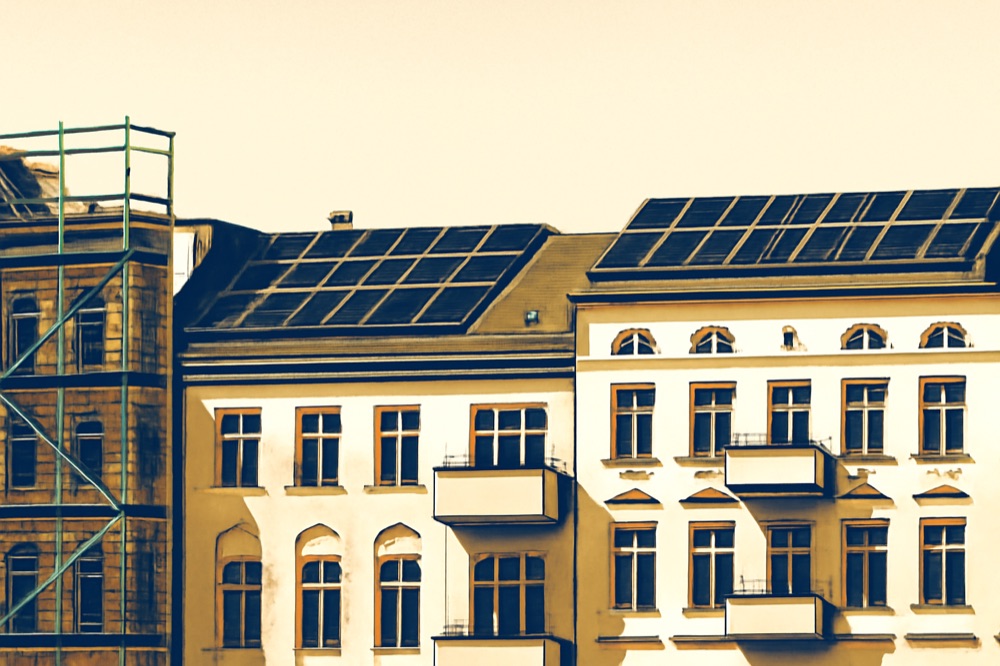
Berlin’s Solargesetz (SolarG Bln) has applied to new buildings and to existing buildings undergoing a “substantial alteration of the roof” since 1 January 2023. Owners of non‑public buildings with more than 50 m² usable floor area must install PV when they start a new build after 31 December 2022 or carry out a qualifying roof project after that date. For roof works, at least 30% of the net roof area must be solar‑equipped; for new builds, it is 30% of the gross roof area. Small residential buildings can comply with a minimum installed capacity instead of the percentage (2 kW for up to two dwellings; 3 kW for 3–5; 6 kW for 6–10). Solar thermal can substitute for PV to meet the duty. ([berlin.de](https://www.berlin.de/sen/energie/erneuerbare-energien/solargesetz-berlin/20210715_solargesetz-berlin.pdf))
Baden‑Württemberg (BW) introduced a PV obligation in stages: for new residential buildings from 1 May 2022 and for “fundamental roof renovations” of existing buildings from 1 January 2023. The Photovoltaik‑Pflicht‑Verordnung (PVPf‑VO) operationalises the law. In the standard proof method, at least 60% of each solar‑suitable single roof area must be covered by modules; suitability depends on orientation, shading and a contiguous minimum area (typically 20 m²). ([baden-wuerttemberg.de](https://www.baden-wuerttemberg.de/de/service/presse/pressemitteilung/pid/photovoltaik-pflicht-fuer-alle-neuen-wohngebaeude-ab-1-mai-1/?utm_source=openai))
Germany has also legislated a staged federal solar duty aligned with the EU Buildings Directive (EPBD). Under the 2026 Gebäudemodernisierungsgesetz (GModG), §106 introduces solar requirements starting 1 January 2027 for new public and other non‑residential buildings above 250 m², with further stages through 2031 and, from 1 January 2030, for new residential buildings. The federal staging mirrors Article 10 EPBD timelines for solar on buildings. ([gebaeudeforum.de](https://www.gebaeudeforum.de/ordnungsrecht/gmodg/solarenergie/))'}},{
What counts as a roof renovation that triggers the duty?
Berlin defines “substantial alterations of the roof” as works where the water‑bearing layer is significantly renewed via an attic conversion, an additional storey, or a fundamental roof renovation. Berlin’s practice guide clarifies that if only part of the roof is being worked on, the duty still applies where more than 50% of the roof’s water‑bearing layer is renewed; simple maintenance like patch repairs after storm damage does not trigger the SolarG. ([berlin.de](https://www.berlin.de/sen/energie/erneuerbare-energien/solargesetz-berlin/20210715_solargesetz-berlin.pdf))
In Baden‑Württemberg, a „grundlegende Dachsanierung“ is when the waterproofing or the covering is renewed in full. Partial repair or maintenance on sub‑areas is not sufficient to trigger the PV duty. ([um.baden-wuerttemberg.de](https://um.baden-wuerttemberg.de/fileadmin/redaktion/m-um/intern/Dateien/Dokumente/5_Energie/Erneuerbare_Energien/Sonnenenergie/PV-Pflicht/Verordnung-zur-Aenderung-der-PV-Pflicht-Verordnung-barrierefrei.pdf?utm_source=openai))
BW’s PVPf‑VO also sets how to measure compliance: by default, cover at least 60% of each suitable single roof area; public‑law green‑roof requirements reduce the minimum coverage by half on the affected area. ([landesrecht-bw.de](https://www.landesrecht-bw.de/bsbw/document/jlr-NNLBW00007BEDNN00000000014/format/xsl/additional/%7B%22fixedPart%22%3A%22true%22%7D?oi=ET4hAcaADS&sourceP=%7B%22source%22%3A%22DocPart%22%7D&utm_source=openai))
Exemptions and alternative compliance
Berlin exemptions are set in §5 SolarG Bln. The duty lapses if it conflicts with other public‑law rules, is technically impossible, or is “not justifiable” in defined cases, including exclusively north‑facing roofs. Instead of PV, owners can comply with solar thermal in line with the Building Energy Act (GEG), or by installing PV on another exterior surface if it meets the minimum size. A formal exemption (“Befreiung”) may be granted for undue hardship; the city lists examples such as extreme cost imbalance or unusable roof areas due to required structures or shading. ([berlin.de](https://www.berlin.de/sen/energie/erneuerbare-energien/solargesetz-berlin/20210715_solargesetz-berlin.pdf))
Berlin enforcement includes sample checks by building control and fines up to €5,000 for one‑ or two‑family houses, €25,000 for multifamily, and €50,000 for non‑residential buildings under §9 SolarG Bln. ([berlin.de](https://www.berlin.de/sen/energie/erneuerbare-energien/solargesetz-berlin/20210715_solargesetz-berlin.pdf))
In Baden‑Württemberg, you can meet the duty with PV or, in specified cases, with solar thermal. A partial or full exemption applies if compliance would jeopardise the feasibility of the project or pose undue hardship. The key quantitative test for roof renovations is whether grid‑connection and system costs exceed 70% of the remaining PV costs; above this threshold, authorities may reduce the required PV to the level that restores feasibility. Applications go to the local building authority with the building submission, or at least two months before works start. ([um.baden-wuerttemberg.de](https://um.baden-wuerttemberg.de/de/klima-energie/energiewende/erneuerbare-energien/sonnenenergie/photovoltaik/photovoltaikpflicht/faq-photovoltaikpflicht?utm_source=openai))
Federal staging from 2027 and the EU backdrop
From 1 January 2027, §106 GModG requires solar on new public buildings and on new non‑residential buildings with useful floor area above 250 m²; from 1 January 2028 the duty extends to existing large public buildings and to existing non‑residential buildings above 500 m² when they undergo specified renovations, and from 1 January 2030 to new residential buildings. The federal rules allow exemptions where technically impossible, functionally infeasible or economically unreasonable, and sit alongside stricter Länder rules like Berlin and BW. ([gebaeudeforum.de](https://www.gebaeudeforum.de/ordnungsrecht/gmodg/solarenergie/))
These dates align with Article 10 of the recast Energy Performance of Buildings Directive (EU) 2024/1275, which requires Member States to ensure solar on new public and non‑residential buildings by 31 December 2026 and, by 31 December 2027, on existing non‑residential buildings above 500 m² when undergoing major renovation or roof works that require a permit. Germany has confirmed national transposition via the 2026 GModG. ([eur-lex.europa.eu](https://eur-lex.europa.eu/legal-content/EN/TXT/?qid=1777090778877&uri=CELEX%3A02024L1275-20260524&utm_source=openai))
Note that EU rules provide discretion for national criteria and exemptions, so local application can differ. Always check project‑specific permitting with the local Bauamt and, for commercial assets, with your TGA/electrical designer. ([energy.ec.europa.eu](https://energy.ec.europa.eu/topics/energy-efficiency/energy-performance-buildings/energy-performance-buildings-directive/solar-energy-buildings_en?prefLang=es&utm_source=openai))
Practical pointers for foreign buyers and expats
- Berlin: Check if your scope qualifies as a “substantial alteration” and measure the net roof area. If only part of the roof is renewed but more than 50% of the water‑bearing layer is replaced overall, you are still in scope. The city’s service page provides the exemption form and examples. ([berlin.de](https://www.berlin.de/sen/energie/erneuerbare-energien/solargesetz-berlin/20221205_praxisleitfaden_zum_solargesetz_berlin.pdf?ts=1753444856&utm_source=openai))
- Baden‑Württemberg: On roof renovations, plan coverage of at least 60% of each suitable roof segment. Suitability criteria (orientation, shading ≥75% of reference, ≥20 m² contiguous area) and the 70% cost test are decisive for any (partial) exemption. File early with the building authority. ([landesrecht-bw.de](https://www.landesrecht-bw.de/bsbw/document/jlr-NNLBW00007BEDNN00000000014/format/xsl/additional/%7B%22fixedPart%22%3A%22true%22%7D?oi=ET4hAcaADS&sourceP=%7B%22source%22%3A%22DocPart%22%7D&utm_source=openai))
- Federal: For new non‑residential assets permitted from 2027, budget for rooftop solar unless a statutory exemption applies. Align equipment choices and layout with grid‑connection constraints early; grid and “system costs” can drive feasibility and exemption arguments. Engage a German architect (Bauvorlageberechtigt), an energy consultant (Energieberater) and, where needed, a specialist construction lawyer. ([gebaeudeforum.de](https://www.gebaeudeforum.de/ordnungsrecht/gmodg/solarenergie/))
Nothing on this page is investment, tax or legal advice. Price bands are indicative asking prices and disagree between sources by design. Verify every figure with a qualified German notary, tax adviser (Steuerberater) or lawyer before committing capital.