
All articles
How German banks value rooftop PV and batteries for mortgage security (Sep–Oct 2026)
Practical guide for foreign buyers on how German lenders treat rooftop photovoltaic and battery systems as collateral: legal classification, documents banks want, Grundbuch and lien checks, valuation approach under BelWertV and vdp guidance, and warranties non‑resident buyers should insist on.
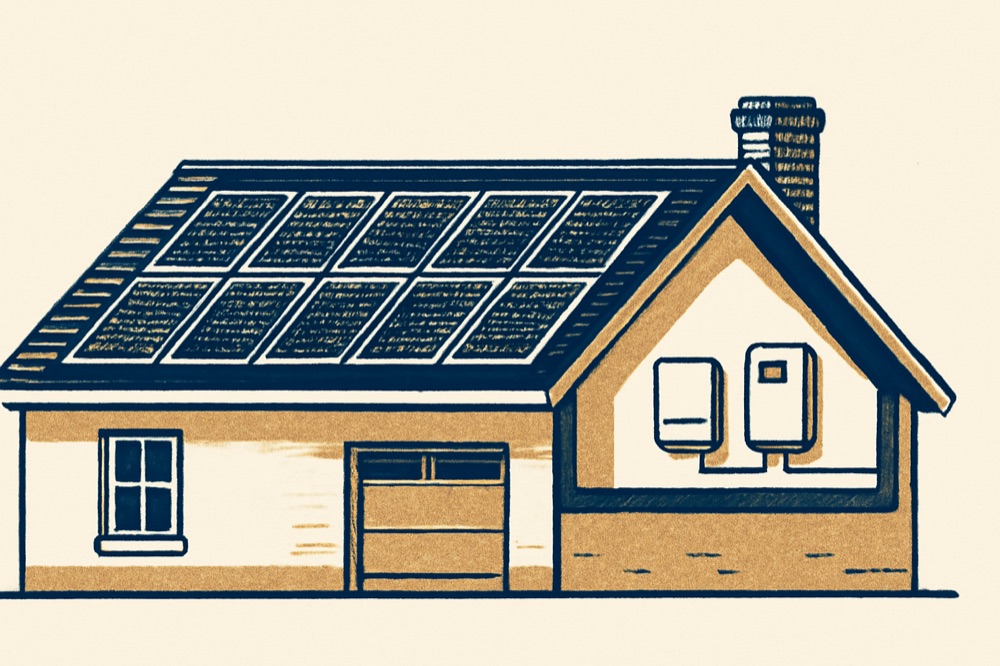
How banks treat rooftop PV and batteries: legal starting points
German mortgage lenders base their valuation practice on the Beleihungswertermittlungsverordnung (BelWertV) and industry implementation guidance published by the Verband deutscher Pfandbriefbanken (vdp). The BelWertV makes the Beleihungswert the reference for mortgage lending and requires that all value‑affecting rights and burdens be taken into account when determining that value. The vdp has published a specific FAQ and implementation notes that address Photovoltaik‑Aufdachanlagen and explain how banks should treat owner‑operated versus third‑party‑operated systems (vdp FAQ, Stand: 19 September 2011).
Classification matters: immovable part of the building or movable asset?
Whether a PV or battery is treated as part of the real estate (an immovable component) or as a movable good is decisive for mortgage security. German case law and notarial practice show that the answer depends on how the system is attached, how it was transferred in the sale, and whether any dingliche right (e.g. a servitude) was registered. Courts have accepted both outcomes: some rooftop systems are “wesentlicher Bestandteil” (part of the building) while others—especially standard framed Aufdach systems—are classified as movable. If a system is not a building component, it will not automatically pass with the land transfer and may require separate transfer/assignment documents for the lender to accept it as collateral.
Documents and checks lenders commonly require
Primary documents banks will ask for (supported by BelWertV/vdp guidance and notarial practice): a current official Grundbuchauszug showing existing Grundpfandrechte; copies of any Eintragungsbewilligungen or registered servitudes that concern the system; evidence of ownership transfer (invoices, sales/assignment agreement) if the PV/battery was sold separately; contracts that affect cash flow — e.g. lease or operation agreements where a third party operates the system, and any assignment (Abtretung) of feed‑in revenues or PPA claims. The Grundbuch procedure and the scope of entries are governed by the Grundbuchordnung; the notary will need these documents to judge whether the system is encumbered. The vdp FAQ explicitly flags the difference between owner‑owned and fremd‑betrieben systems and asks valuers to document rights that affect value.
Lien checks and what will block a lender
Banks insist on a full title check (Grundbuchauszug) because registered charges and servitudes reduce recoverable value. The Grundbuchordnung requires that entries and references to supporting documents be available to parties with an interest in the entry. If the PV system is operated by a third party under a long‑term right that is registered or documented, that right will be a value‑reducing factor in the Beleihungswertermittlung and must be documented for the lender (BelWertV §5; vdp FAQ).
Valuation approach and 'haircuts' — what the rules say (and what they do not)
There is no published, single percent 'haircut' for PV or batteries in federal regulation. Instead BelWertV requires valuers to account for age, remaining useful life, reproducibility of income and any rights of third parties when calculating the Beleihungswert; the vdp implementation notes give further practical guidance for PV systems. That means a valuer will model the building value via Sach‑ and/or Ertragswertmethods and separately recognise any value‑reducing aspects such as removability, warranty risk, subsidy or tariff uncertainty and battery degradation. Accounting practice guidance on expected recoveries from real‑estate securities (IDW PH 9.522.1, July 2026) emphasises that institutions must document assumptions used when estimating recoverable proceeds from collateral. Because lenders apply commercial judgement rather than a statutory percentage, actual haircuts vary by lender and case — you must obtain lender‑specific guidance early in negotiations.
Warranties and assignments non‑resident buyers should insist on
If you are a non‑resident buyer, require the following, and make acceptance by the lender a condition precedent: clear written transfer of ownership or an explicit clause in the notarised sales deed that the PV and battery are included in the purchase; copies of all maintenance and operations contracts plus a lender‑approved assignment (or at least waiver) of rights by any third‑party operator; transferred or assigned warranty documents from the installer/manufacturer (inverter and battery cycle/lifetime warranties); and documented assignment or direct creditor status over receivables from any feed‑in or PPA contracts. Also require seller warranties of no undisclosed encumbrances and a recent Grundbuchauszug. These documentary steps reflect the vdp requirement to evidence rights and burdens that affect value and the notarial/grundbuch practice that a movable system may need separate transfer documentation.
Practical checklist and next steps
Before signing: order a recent Grundbuchauszug; ask the seller/notary to confirm whether the PV/battery passed with the land or was retained; obtain copies of installation, commissioning and warranty documents (inverter, modules, battery), operations/lease contracts, and any feed‑in agreements; request the lender’s PV/battery underwriting checklist and confirm whether the bank will accept the equipment as part of the mortgage collateral or needs separate security. Engage a German property lawyer and the mortgage lender early: classification and documentation determine whether the lender will accept the systems in the Beleihungswert.
Nothing on this page is investment, tax or legal advice. Price bands are indicative asking prices and disagree between sources by design. Verify every figure with a qualified German notary, tax adviser (Steuerberater) or lawyer before committing capital.

