All articles
KfW 308 ‘Jung kauft Alt’: higher caps from 3 Aug 2026 and how to pair with KfW 124
From 3 August 2026 KfW raises ‘Jung kauft Alt’ (308) loan ceilings to €140k/€160k/€180k. Who qualifies, what to renovate by when, and how foreign buyers living abroad can combine it with KfW 124.
First, the product: it’s KfW 308, not WEF 300
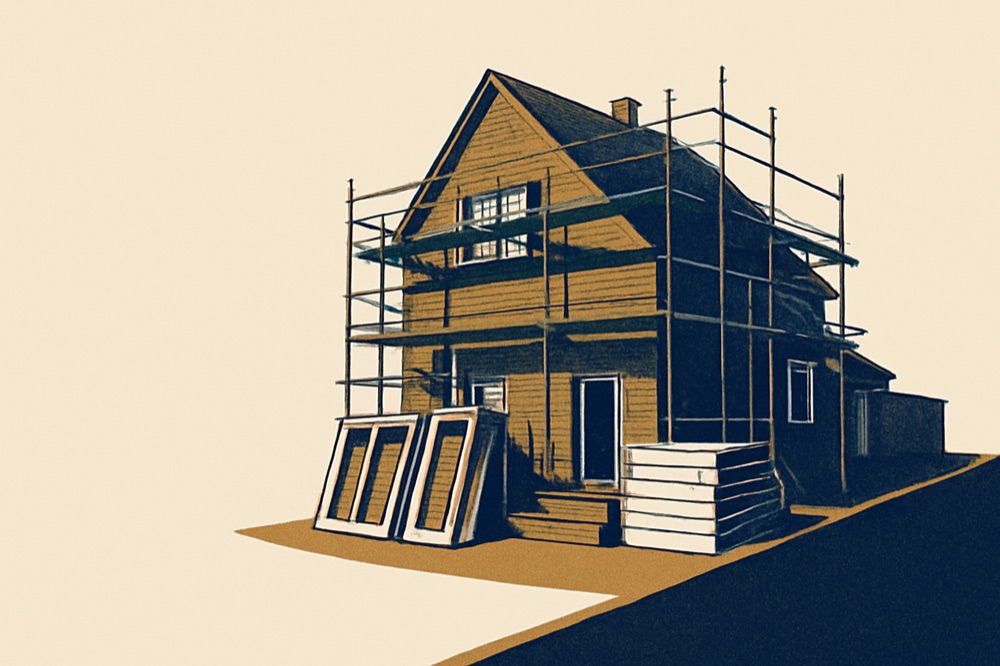
“Jung kauft Alt” is KfW programme no. 308, officially “Wohneigentum für Familien – Bestandserwerb”. It supports families who buy an existing poor‑efficiency home in Germany and then renovate it while living in it. WEF 300 is a separate KfW new‑build product (“Wohneigentum für Familien – Neubau”). On 30 July 2026 KfW announced that, from 3 August 2026, loan ceilings in 308 will rise materially to reflect higher prices and renovation needs. KfW is the implementing agency for the Federal Ministry for Housing (BMWSB). See KfW’s press release (30 July 2026) and the current 308 product page for scope and conditions; see the 300 product page to confirm it is for new build only.
Who is eligible under 308 (‘Jung kauft Alt’)?
- Household: at least one child under 18 must live in the household. - Income: taxable annual household income must not exceed €90,000 with one child, plus €10,000 for each additional child. - Property: an existing home in Germany in energy class F, G or H at application, proven by a valid energy performance certificate. - Use: you must own and occupy it yourself (at least 50% co‑ownership share). At application you may not already own a residential property in Germany. - Application channel: you apply through a financing partner (Hausbank), not directly at KfW. KfW’s partner page for 308 sets out these conditions, including the energy‑class requirement and the restriction to owner‑occupiers without other German residential property. It also confirms foreign tax assessments are accepted with certified translation, which matters if you file taxes outside Germany. Proof of self‑occupancy is later shown by registration (Meldebestätigung).
What changed on 3 August 2026: loan sizes and interest
KfW increased the maximum 308 loan amount per household as follows, effective 3 August 2026: €140,000 with one child (previously €100,000), €160,000 with two children (previously €125,000), and €180,000 with three or more children (previously €150,000). KfW stated on 30 July 2026 that the effective interest rate for a 35‑year loan with 10‑year fixed was 0.53% on that date; rates are subsidised with BMWSB funds and are set at the day of KfW’s commitment. You apply via your Hausbank.
What 308 funds — and what it does not
308 finances the purchase price of the home, including land. It does not finance incidental purchase costs (broker, notary, land transfer tax) and it does not finance the renovation works themselves. Renovation is financed separately through the Federal Funding for Efficient Buildings (BEG): KfW’s BEG loans for residential buildings (261) for whole‑house standards, KfW’s heating grant for homeowners (458), and BAFA’s BEG grants for individual efficiency measures. This split is explicit on the KfW 308 page.
The renovation obligation: scope and deadlines
When you take a 308 loan you commit to renovate within 54 months of KfW’s commitment. You have two routes: - Whole‑house route: renovate to “Effizienzhaus 85 EE” (or “Effizienzhaus Denkmal EE”). - Individual‑measures route: usually all of the following must be implemented — window replacement; wall insulation; roof insulation or top‑floor‑ceiling insulation; and a heating replacement so that at least 65% of final energy is renewable. KfW lists limited exceptions in the Merkblatt. Plan capacity and permits early; missing the 54‑month deadline breaks a key funding condition. Use an energy‑efficiency expert from the dena list and keep all confirmations (notably the “Bestätigung nach Durchführung” after works).
How foreign residents can combine 308 with KfW 124
KfW 124 (“Wohneigentumsprogramm”) is a general owner‑occupier loan of up to €100,000 per project. It can be combined with other KfW products; the KfW 124 page states that combinations are possible. Unlike 308, 124 can finance incidental purchase costs (broker, notary, land transfer tax) and also parts of the purchase price and eligible works such as non‑energy modernisation. A common structure for foreign buyers is therefore: use 308 for the purchase price (up to €140k/€160k/€180k from 3 August 2026), add KfW 124 (up to €100k) for incidental costs and, if needed, an extra slice of the purchase price, and finance renovation with BEG (KfW 261 loan, KfW 458 heating grant, BAFA grants). Avoid double‑funding the same cost item; your bank will allocate each loan to distinct cost lines. Eligibility specifics for buyers living abroad: KfW 308 recognises foreign tax assessments with certified translation. For 308 you will later prove self‑use via registration in Germany (Meldebestätigung). For 124 the property must be in Germany and the loan must be secured by a land charge; you apply via a German financing partner. Banks will run standard credit and collateral checks. Sign the purchase only after your KfW application, or use a conditional clause provided on the KfW 308 page if a signing cannot wait.
Process checklist and pitfalls
- Before searching, confirm your taxable household income and child count against the 308 thresholds. KfW uses tax assessments from the two prior years; foreigners can submit certified translations. - Obtain an energy performance certificate showing class F/G/H before applying for 308. - Speak to your Hausbank before signing. If you must sign, have the notary include KfW’s suggested suspensive clause. - Budget a renovation plan that meets either EH 85 EE or all listed individual measures and fits within 54 months. Line up an energy‑efficiency expert from the dena list. - Keep purchase costs separate on paper so 308 funds only the purchase price, while 124 covers incidentals. Finance renovation via BEG (261 loan; 458 heating grant; BAFA EM grants). - Risk: failing to meet the renovation obligation within 54 months or skipping a required measure breaches funding conditions. Clarify consequences with your bank in writing. The KfW 458 heating grant is subject to available federal budget and may close temporarily; time your applications accordingly. This is not personalised legal, tax or investment advice. For structuring and documents, speak to your financing bank, a Steuerberater (tax adviser), and a dena‑listed energy‑efficiency expert.
Nothing on this page is investment, tax or legal advice. Price bands are indicative asking prices and disagree between sources by design. Verify every figure with a qualified German notary, tax adviser (Steuerberater) or lawyer before committing capital.