
All articles
Hamburg July 2026: 75-year extensions for listed homes on city land — pricing, indexation, resale
From 7 July 2026, Hamburg plans 75‑year Erbbaurecht extensions for listed single‑family homes on city land. Here’s what it means for pricing, Erbbauzins indexation and resale clauses.
What changed on 7 July 2026
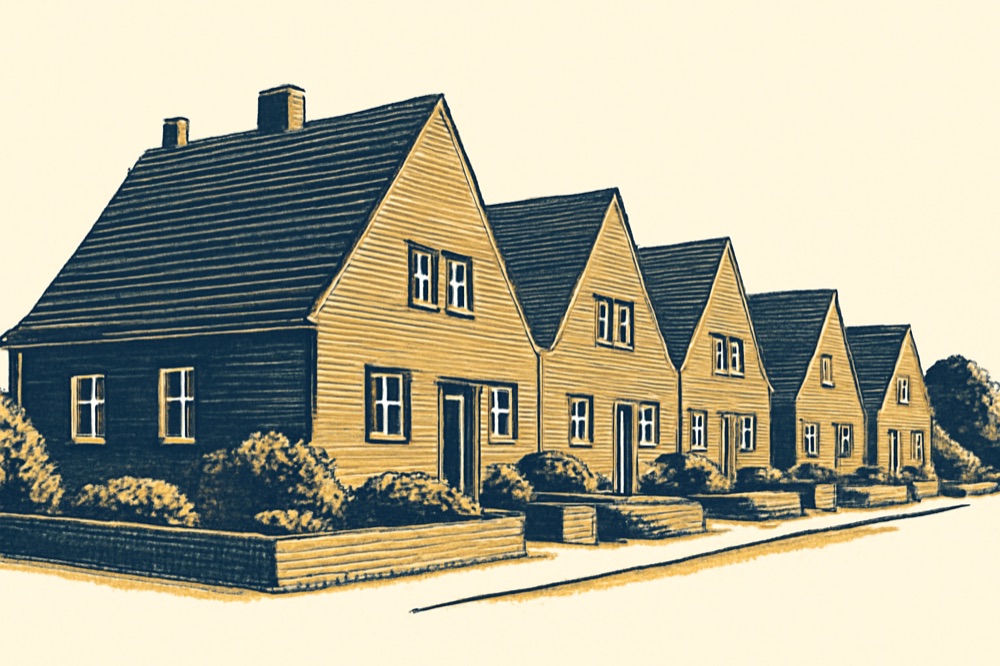
On 7 July 2026 the Hamburg Senate announced a policy to lengthen extensions of Erbbaurechte (heritable building rights) for listed residential "Eigenheime" on city land: instead of the previously usual 40 years, qualifying leaseholds can be extended by 75 years. The measure is aimed at listed single‑family, semi‑detached and terraced houses on plots owned by the City of Hamburg. The decision is subject to approval by the Hamburgische Bürgerschaft (state parliament). Details are to be implemented in contracts by the Landesbetrieb Immobilienmanagement und Grundvermögen (LIG). As of 20 September 2026, the press release remains the primary official statement, with the example given that residents of the listed Fritz‑Schumacher‑Siedlung in Langenhorn should be able to extend their expiring leaseholds through to 31 December 2104. The Bürgerschaft’s documentation portal also lists an item titled “Laufzeitverlängerung … insbesondere in der Fritz‑Schumacher‑Siedlung,” noting a 75‑year extension with a common end date of 31 December 2104. Investors should verify the final Bürgerschaft approval and the exact contract text for any given property before committing.
Pricing: why a longer term matters
In Hamburg, the Committee of Valuation Experts (Gutachterausschuss) publishes comparative factors for leaseholds by remaining term and ground‑rent rate. In its 2026 market report, for Erbbauzins of 3%, the comparative factor for leaseholds with 30–39 years remaining is shown as 0.92, rising to 1.03 for terms of 50 years or more. That is a material uplift in the factor used in market comparisons once the remaining term gets above 50 years. Buyers should have a valuer translate these factors into a price effect for the specific asset; the factor is a tool used in comparable‑based valuations, not a direct “percentage of freehold” rule. The same report provides factor bands for other ground‑rent rates, illustrating that both the remaining term and the agreed Erbbauzins drive value. Short remaining terms depress prices; lengthening the term can improve saleability and mortgageability.
Erbbauzins: current level and indexation rules
Hamburg sets the running Erbbauzins for newly ordered or extended residential leaseholds by reference to the current land value at the time of contract. Since January 2023 the city has charged 1.3% p.a. of land value for residential use. The LIG stated in 2023 that these rates were fixed for at least three years from July 2023, and the government parties signalled in early 2026 that the 1.3% rate would continue to apply in 2026. When leaseholds are extended, the city applies the then‑current rate to the then‑current land value. Contracts on Hamburg city land typically index the Erbbauzins every three years to the German consumer price index (Verbraucherpreisindex). The LIG’s brochure sets this out explicitly and shows when the first CPI step‑up occurs (e.g., in year 4 of a new or extended term). Under § 9a of the German Erbbaurechtsgesetz, any Erbbauzins increase for buildings serving residential purposes must not be “unreasonable” when all circumstances are weighed; the CPI‑linked mechanism is the usual benchmark. Buyers should model the CPI steps in their cash flow and ask the notary to confirm the exact index clause.
Resale and financing clauses to check
City‑of‑Hamburg ground leases generally require the owner’s consent to sell or encumber the Erbbaurecht. This follows § 5 and § 7 ErbbauRG and is standard in Hamburg contracts; a published example contract (Binderstraße 34) shows a detailed consent clause and conditions. That contract also caps future mortgage debt at 70% of the then‑current market value of the Erbbaurecht and requires a tripartite agreement with the lender. Expect similar structures in residential city‑land contracts, but confirm the exact wording. Hamburg also charges transaction‑related fees in its contracts: a 2% “Aufwandsbeteiligung” (processing contribution) capped at €30,000 is standard for city property transactions (including Erbbaurecht orders/extensions), and where the LIG conducts the execution itself, a separate 0.3% implementation fee capped at €6,000 applies. Statutory municipal rights of first refusal under § 24 BauGB do not apply to purchases of Erbbaurechte; any pre‑emption right will be purely contractual, if agreed. In listed areas such as the Fritz‑Schumacher‑Siedlung (which also lies in a district conservation area), alterations to buildings require a monument permit from the Culture and Media Authority; budget for this and the associated timelines. Finally, the Bürgerschaft has noted in a 2024 document that lenders in practice often require loans on leaseholds to amortise about 10 years before the contractual end of term (Heimfall). A 75‑year extension therefore eases amortisation schedules and can lower debt service compared with a 40‑year extension.
Who benefits and what to do next
The July 2026 measure targets listed single‑family, semi‑detached and terraced houses on city land. The first application cited by the Senate is the Fritz‑Schumacher‑Siedlung in Langenhorn. If you are considering buying a listed house on City of Hamburg land or an existing Hamburg leasehold right: 1) obtain the current contract and check the remaining term, index clause, consent and security provisions, and any contractual pre‑emption; 2) ask LIG whether the 75‑year extension will be offered for that address and on what conditions; 3) have a sworn valuer map the Gutachterausschuss’s factor ranges to your specific asset; 4) budget Erbbauzins at 1.3% of current land value (as at the extension date) and model CPI steps every three years; 5) confirm heritage permit requirements and timelines; 6) have a Hamburg notary and a lawyer versed in Erbbaurecht and Denkmalschutz review the file. This is not personalised legal or tax advice; for structuring, speak to a notary (Notar/in) and a specialist real‑estate lawyer in Hamburg.
Nothing on this page is investment, tax or legal advice. Price bands are indicative asking prices and disagree between sources by design. Verify every figure with a qualified German notary, tax adviser (Steuerberater) or lawyer before committing capital.